

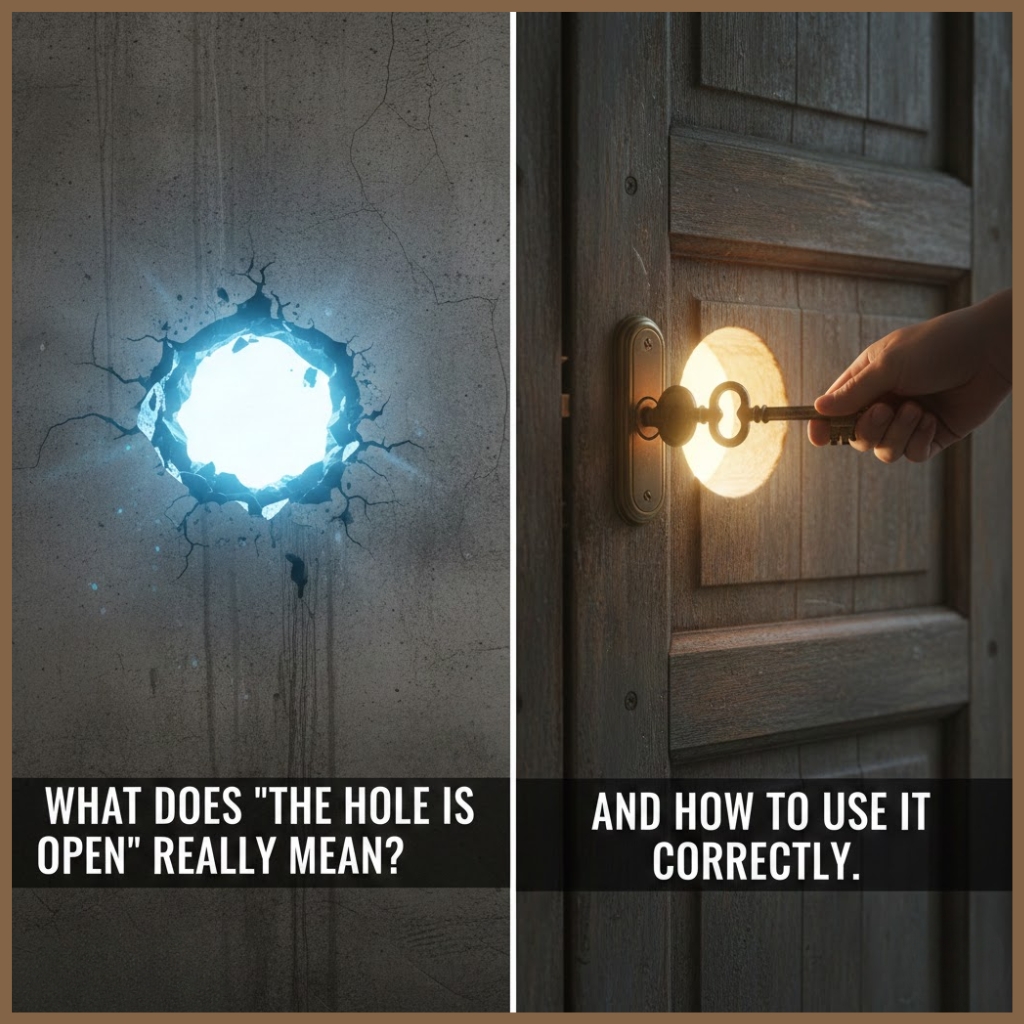
Language evolves in unexpected ways, often through phrases that capture imagination, humor, or cultural nuance. One such phrase that has recently gained traction is “the hole is open.” At first glance, it may seem literal, yet its uses extend far beyond the physical meaning. Understanding this phrase requires examining its linguistic roots, cultural spread, psychological undertones, and practical applications in everyday communication.
In this guide, we’ll explore what the phrase truly signifies, why it resonates online, how it spreads across social media, and how to use it correctly in different contexts. Whether you’re a language enthusiast, a content creator, or simply curious about modern expressions, this article offers a comprehensive exploration.
Definition and Origins
Literal vs Figurative Interpretations
Literally, “the hole is open” describes a physical gap or opening in an object, wall, or surface. However, this is rarely the intended use in contemporary contexts. Figuratively, the phrase often represents opportunity, vulnerability, or an invitation for action. It can signal an open path, a new possibility, or a moment of risk, depending on the surrounding context.
Historical and Cultural Roots
While the exact origin is difficult to trace, the phrase gained visibility through digital communication and social media platforms, particularly TikTok, Twitter, and niche internet forums. Its adoption mirrors patterns observed in viral language, where simple phrases carry layered meaning. Linguists note that semantic drift—the gradual shift in a phrase’s meaning over time—plays a key role in its popularity.
Linguistic and Semantic Analysis
Understanding the Cognitive Framing
From a cognitive linguistics perspective, the phrase is an example of a conceptual metaphor. Here, a physical “hole” becomes a mental representation of opportunity, risk, or vulnerability. The polysemy of the word “hole” allows multiple interpretations simultaneously, making it versatile for social, literary, and conversational use.
Ambiguity and Polysemy
The phrase’s ambiguity is what drives engagement. Depending on tone, context, and audience, it may imply:
- Opportunity: A chance for growth or action.
- Vulnerability: Emotional or situational exposure.
- Humor or meme usage: A punchline or shared inside joke.
Semantic Drift in Digital Culture
Internet linguistics experts observe that phrases like this evolve rapidly. Memes, captions, and viral videos repurpose the phrase, adding new layers of meaning. For example, a TikTok clip showing a literal hole may include the caption “the hole is open,” blending literal and figurative interpretation, which enhances engagement and relatability.
Also read: Is the Tooth Fairy Real or Just a Childhood Myth Explained
How “The Hole Is Open” Spread Online
Social Media Adoption Patterns
The phrase became widely recognized through viral memes and social posts. Key factors contributing to its spread include:
- Relatability: The phrase captures a universal feeling of opportunity or vulnerability.
- Simplicity: Short, easy to type, and visually adaptable.
- Versatility: Fits humor, motivational content, or commentary.
Platforms and Communities
- TikTok: Short videos demonstrating literal and metaphorical holes.
- Twitter/X: Micro-posts employing witty or ironic contexts.
- Reddit & Forums: Discussions exploring meaning, usage, and evolution.
Meme Evolution
The phrase functions as a meme template, allowing users to overlay context-specific meaning. This adaptability ensures longevity and continued adoption across digital spaces.
Emotional and Psychological Interpretations
Vulnerability and Openness
In conversational or narrative contexts, “the hole is open” can symbolize emotional vulnerability. For instance, admitting a mistake or exposing a personal experience may be referred to as “the hole is open,” signifying that one is ready to be seen or engaged with authentically.
Cognitive Framing and Meaning Shifts
Human cognition naturally interprets openings—whether physical, emotional, or conceptual—as opportunities or risks. The phrase leverages this cognitive frame, signaling that action is possible, and interpretation depends on context.
Practical Examples
- Social media: “The hole is open, time to fix my mistakes.”
- Storytelling: “He noticed the hole is open and decided to step carefully.”
- Everyday conversation: “The hole is open, do you want to go first?”
Comparative Phrase Analysis
Similar Viral Expressions
Other expressions convey comparable meaning, but each carries subtle distinctions:
| Phrase | Meaning | Contextual Nuance |
|---|---|---|
| In the hole | Literally trapped or in debt | Often negative connotation |
| FOMO | Fear of missing out | Opportunity-driven, social anxiety |
| I can’t even | Overwhelmed emotion | Humor or dramatic exaggeration |
| The hole is open | Opportunity, vulnerability, humor | Flexible, context-dependent |
Why “The Hole Is Open” Stands Out
Unlike fixed expressions, it allows multi-layered interpretation, blending literal, metaphorical, and humorous contexts seamlessly. This versatility is rare in modern viral phrases.
Practical Usage and Examples
Everyday Communication
The phrase works in both casual and formal scenarios:
- Casual: “Watch out, the hole is open!” — warning someone of a literal hazard.
- Humorous: Meme caption on social media showing an unexpected opening.
- Professional/Creative Writing: Metaphorical use to indicate a gap in process or opportunity.
In Creative Writing
Writers can use the phrase to evoke metaphorical meaning without heavy exposition. For example:
“The hole is open, and with it, the chance to change everything.”
This conveys opportunity or risk subtly, relying on the reader’s cognitive mapping.
Misinterpretations and Clarifications
Cultural and Contextual Variations
Because the phrase is relatively new and viral, misinterpretations are common. Literal readings may confuse non-native speakers or those outside digital communities. Context cues—tone, platform, visuals—are crucial to proper understanding.
Common Mistakes to Avoid
- Assuming it always represents opportunity.
- Using it in formal writing without context.
- Ignoring the visual or situational cues when interpreting memes.
Future Trends in Viral Language
H2: Predicted Evolution
Linguists predict that the phrase may continue to evolve, possibly:
- Becoming shorthand in messaging apps.
- Inspiring derivatives or hybrid phrases.
- Appearing in commercial or media content as an idiom.
Broader Implications
The adoption of “the hole is open” highlights how digital platforms accelerate semantic drift, emphasizing the role of context, audience, and cognitive framing in modern language evolution.
FAQS: What Does The Hole Is Open
What does “the hole is open” really mean?
It generally signifies an opportunity, a vulnerability, or an invitation to act. Its meaning varies based on context, tone, and platform.
Is it a metaphor or a literal phrase?
Both. Literally, it describes a physical gap; metaphorically, it signals conceptual openings like opportunity or risk.
How did it go viral online?
Through social media platforms, meme culture, and its adaptability for humorous or relatable content.
Can it mean both opportunity and risk?
Yes. The phrase’s ambiguity allows simultaneous interpretation as either or both, depending on context.
Conclusion: Key Takeaways
H2: Final Thoughts
“The hole is open” demonstrates how language adapts, spreads, and resonates in digital culture. Understanding its meaning requires recognizing:
- Contextual nuance: Literal, metaphorical, and humorous layers.
- Cognitive framing: Openings symbolize opportunity, risk, or vulnerability.
- Digital evolution: Viral adoption accelerates semantic shifts.
- Practical usage: Effective in conversation, creative writing, and social media.
By considering cultural, psychological, and linguistic factors, users can interpret and employ the phrase accurately, keeping communication precise and relatable.
