

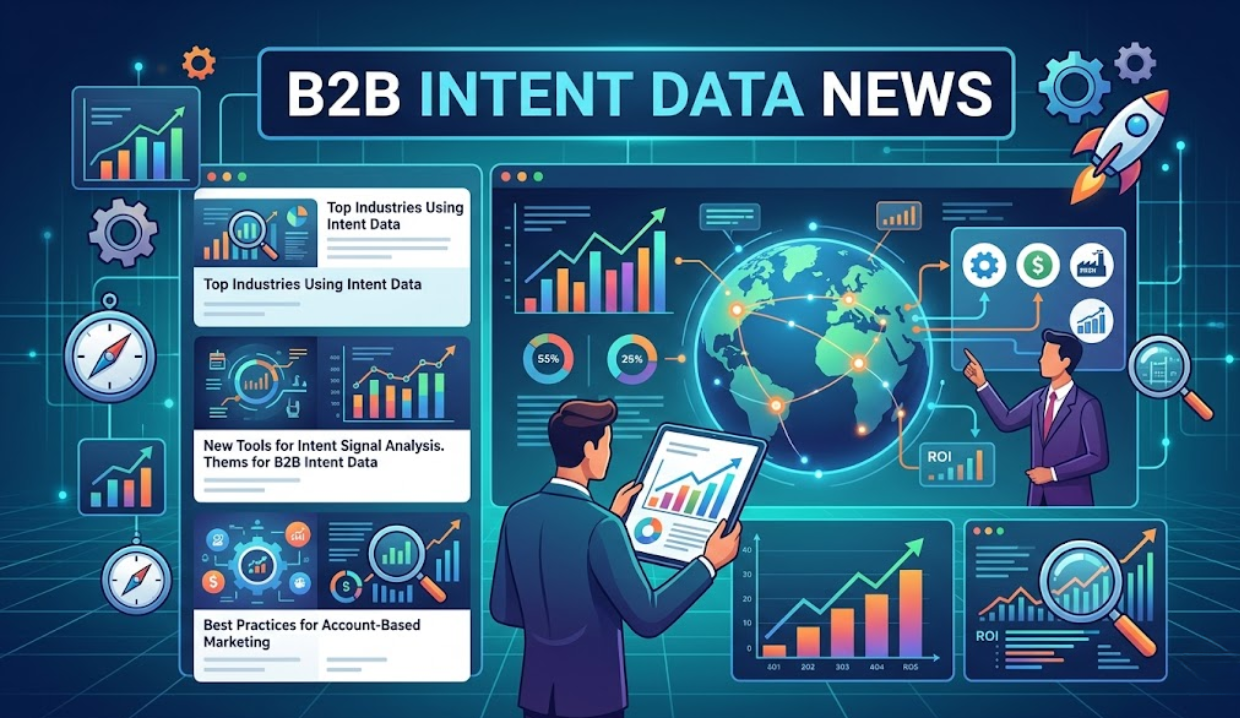
In today’s competitive business landscape, understanding buyer behavior early and reliably has become one of the most valuable assets a company can have. B2B organizations of all sizes are investing in technology and methodologies that reveal not just who might be interested in their solutions—but when and why those prospects are ready to engage. This is where B2B intent data enters the conversation as a transformative force.
In this comprehensive guide, we will explain what B2B intent data is, why it matters, how it works, and the latest news and trends in the space. Whether you’re new to the topic or looking for advanced strategies to leverage intent signals, this article provides clear, practical insights that satisfy both beginner and expert information needs.
What Is B2B Intent Data?
B2B intent data refers to information that indicates a company’s likelihood to purchase a product or service, based on their online behavior and interaction patterns. These intent signals can include content consumption, search behavior, technology usage, and context‑driven interactions across digital channels.
Intent data helps businesses understand not just who might be interested in their offerings, but where prospects are in the buyer journey.
Core Components of Intent Signals
Intent signals can typically be grouped into:
- Behavioral intent signals
Actions such as page visits, content downloads, and repeated searches show interest. - Contextual intent signals
The subject matter and topics a user engages with—e.g., whitepapers or webinars about “enterprise security solutions.” - Semantic intent patterns
Emerging patterns in language and topic clusters that indicate deeper thematic interest.
By combining these elements, organizations can build a more nuanced picture of intent strength and relevance.
Why B2B Intent Data Matters
Intent data changes how B2B teams make decisions. Rather than relying on traditional profiling or reactive outreach, companies can now:
- Identify real demand before conversion occurs
- Prioritize leads with the highest probability of conversion
- Personalize communications based on observed interest
- Align sales and marketing around actual behaviors, not assumptions
In essence, intent allows organizations to be proactive—and more accurate—when engaging potential customers.
Also read: How Can You Dataveria How to Remove Your Information Quickly
How Intent Data Works: The Technology Behind the Signals
At its core, intent data is powered by systems that collect raw signals and transform them into usable insights. These systems rely on:
1. Data Collection & Normalization
Intent platforms aggregate signals from various sources—content interactions, search queries, technology usage, and sometimes partner data networks. These raw interactions are standardized for analysis.
2. Semantic Models & Machine Learning
Advanced semantic intent algorithms and NLP extraction models categorize behaviors into topic clusters and interest categories. This allows systems to detect not just activity but why the activity matters.
3. Cross‑Channel Integration
Modern intent platforms build a holistic view by stitching signals together across devices, sessions, and channels to avoid fragmented profiles.
4. Prediction & Scoring
Ultimately, systems apply predictive intent modeling to generate scores and trigger insights that indicate purchase likelihood based on predefined patterns.
The Latest B2B Intent Data News and Trends
Intent data is a rapidly evolving topic, with new developments shaping how organizations gather and use signals. Below are the key trends defining the space:
1. AI and Semantic Intent Insights
Artificial intelligence is now deeply embedded in intent signal interpretation. By leveraging large language models (LLMs) and advanced AI workflows, platforms can distill deeper context from content engagement than ever before. This means:
- More accurate semantic intent taxonomy
- Enhanced predictive capabilities
- Better differentiation between noise and signal
2. Privacy‑First Tracking and Compliance
Regulatory frameworks such as GDPR and CCPA have forced intent providers to prioritize privacy‑aware intent data frameworks. This includes:
- Consent‑aware pipelines
- First‑party intent enrichment
- Reduced reliance on third‑party cookies
Privacy compliance is not just legal hygiene; it has become a core component of how intent signals are gathered and interpreted.
3. Real‑Time Intent Activation
Organizations increasingly demand real‑time or near‑real‑time delivery of intent signals. This shift allows:
- Faster sales engagement
- Dynamic content personalization
- Timely remarketing actions
Batch processing of signals is becoming less relevant as real‑time intent triggers become the expectation.
4. Cross‑Channel Intent and Omnichannel Insights
Intent data is no longer siloed. Modern solutions focus on multi‑touch intent attribution frameworks that combine:
- Website activity
- Email engagement
- Search behaviors
- Content consumption patterns
This holistic approach gives a clearer view of where a prospect is in their journey.
5. Emergence of API‑First Stacks
Tech stacks are evolving toward API‑first architectures that allow organizations to embed intent data directly into existing business systems (e.g., marketing automation, CRM, analytics). This reduces friction and enables automated action.
Key Intent Data Tools and Platforms
Understanding the ecosystem of tools is crucial for evaluating intent solutions. Some major platforms in the B2B intent space include:
| Platform | Primary Strength | Typical Use Case |
|---|---|---|
| Bombora Intent Signals | Wide network of content sources | Market demand analysis |
| 6sense Predictive Intent | AI‑driven predictive modeling | Account prioritization |
| ZoomInfo Intent Module | Integrated firmographics & intent | Sales acceleration |
| Demandbase Intent | B2B demand classification | Target account identification |
| G2 Buyer Intent | Product‑level review behavior | Competitive analysis |
| TechTarget Priority Engine | Topic‑level intent scoring | Mid‑market engagement |
Each platform has unique differentiators—understanding them helps teams align tools with specific growth strategies.
Practical Applications of B2B Intent Data
Intent data works across sales, marketing, and operations. Here’s how teams benefit:
Sales Enablement
- Prioritize accounts with the highest intent scores
- Personalize outreach based on observed behavior
- Reduce time spent on low‑value prospects
Targeted Marketing Campaigns
- Activate remarketing based on real‑time interest
- Tailor messaging to intent topics
- Improve conversion rates with contextual relevance
Predictive Lead Scoring
Integrating intent signals with predictive analytics helps refine lead scores—beyond demographics or firmographics—by incorporating actual behavior patterns.
Challenges, Limitations, and Best Practices
Intent data is powerful, but not without complexity. Organizations should be aware of:
Signal Noise and False Positives
Not all signals are equal. High volumes of activity can create noise, making it difficult to distinguish true intent from random behavior. Implementing filters and quality controls is critical.
Data Privacy and Consent
Intent vendors must comply with evolving laws and user expectations. Consent‑aware tracking and transparent data usage are essential for ethical implementation.
Integration Complexity
Embedding intent insights into existing workflows requires careful planning. API‑first approaches and cross‑system integration are best practices.
Noise Reduction Techniques
- Validate signals against multiple data sources
- Prioritize high‑fidelity channels
- Use semantic clustering to contextualize behaviors
Measuring ROI from B2B Intent Data
Intent data is only valuable if it delivers a measurable impact. Common metrics include:
- Conversion Lift: Increased conversions from intent‑activated campaigns
- Sales Cycle Reduction: Time saved through prioritized outreach
- Lead Qualification Accuracy: Higher predictive precision
- Revenue Impact: Incremental revenue attributed to intent‑driven actions
Effective measurement often involves A/B testing and comparison against baseline performance metrics.
Future of B2B Intent Data
The next evolution of intent data revolves around:
First‑Party Intent Dominance
Organizations are shifting toward capturing their own behavioral and semantic signals, reducing dependence on external third‑party sources.
Hybrid Intent Modeling
Combining first‑party, third‑party, and contextual data will become standard, yielding richer profiles and higher predictive accuracy.
AI and Semantic Embeddings
AI will continue to enhance how topic‑level intent extraction works, enabling a more precise understanding of why prospects engage with specific content.
FAQS: B2B Intent Data News
What is the difference between first‑party and third‑party intent data?
First‑party intent data is collected directly from your audience (e.g., website visits), while third‑party intent data comes from external networks of behavior across the web.
Can intent data work without cookies?
Yes. Many modern intent systems rely on semantic analysis and first‑party signals that do not require cookies.
How accurate is intent data?
Accuracy depends on the quality of sources, semantic modeling, and integration practices. Filtering and noise‑reduction techniques are key to improving reliability.
Conclusion: Intent Data Is a Strategic Advantage
As B2B marketers and sales teams navigate increasingly complex buying behaviors, intent data provides clarity and direction. It surfaces demand early, informs personalization, and drives measurable business outcomes. By embracing semantic intent signals, real‑time activation, privacy‑aware practices, and integrated tech stacks, organizations can position themselves ahead of the competition.
Intent data isn’t just a tool—it’s a lens into future buying behaviors. The companies that master it will not only react to demand but anticipate and shape it.
