

Football is one of the most popular sports in the world, but if you’re new to the game, one question comes up often: how long is a football game? The answer isn’t as simple as it seems. The duration of a football game depends on the league, level of play, clock rules, and even stoppages during the game.
Understanding game length helps fans plan their viewing, players manage their energy, and coaches optimize strategy. This guide breaks down the timing rules for professional, college, and high school football, covering everything from quarters and overtime to clock stoppages and real-time game length.
Standard Football Game Duration
Football games are structured with defined periods of play, but the total time a game lasts varies widely depending on the level of competition.
NFL Game Timing
- Quarters: 4 quarters of 15 minutes each
- Halftime: 12 minutes (18 minutes during Super Bowl and special events)
- Overtime: Sudden death or modified rules, 10 minutes in regular season, 15 in playoffs
- Play Clock: 40 seconds between plays
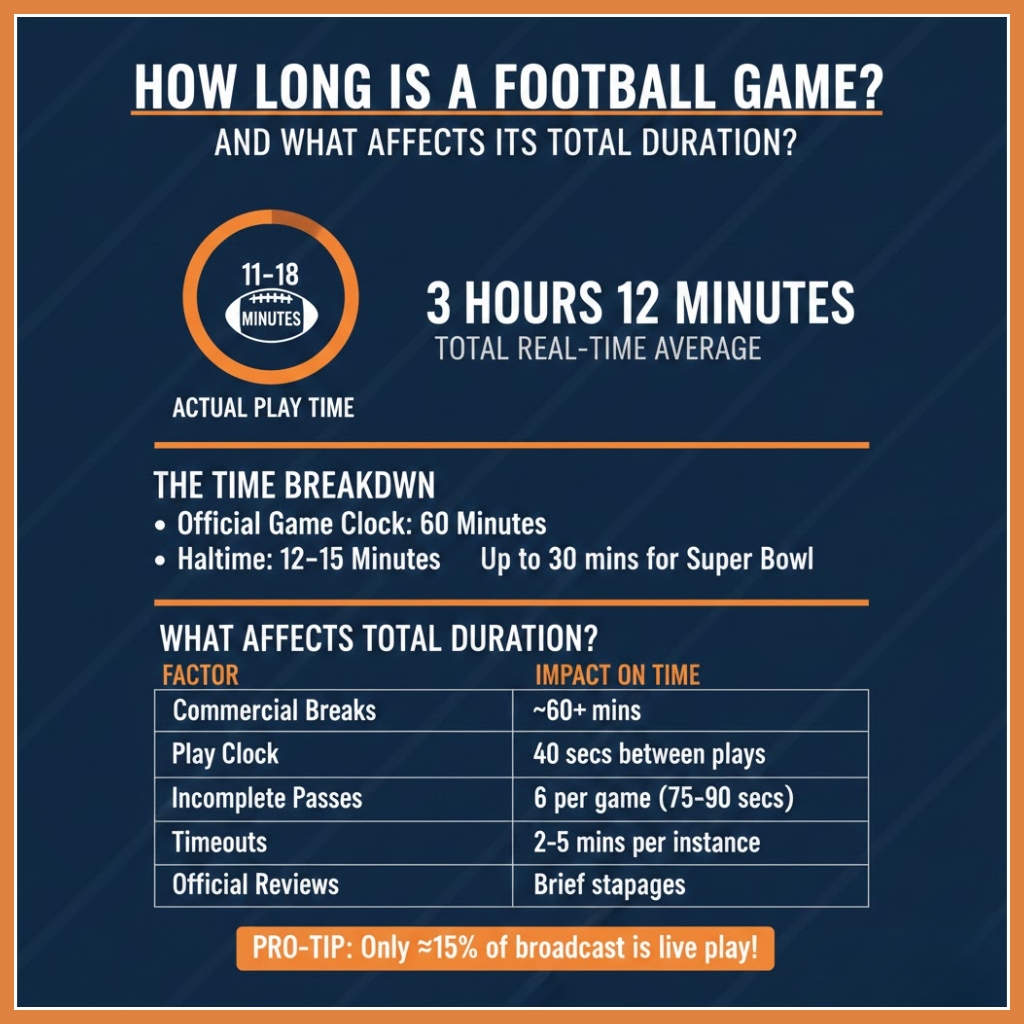
A standard NFL game consists of 60 minutes of regulation play, but with stoppages, reviews, timeouts, and commercial breaks, the average game takes around 3 hours from kickoff to final whistle.
College Football Timing
- Quarters: 4 quarters of 15 minutes
- Halftime: 20 minutes
- Overtime: Each team gets a possession starting at the 25-yard line until a winner is decided
- Play Clock: 40 seconds
College football games often run slightly longer than NFL games, averaging 3 to 3.5 hours, due to longer halftime, more frequent clock stoppages, and overtime rules.
High School Football Duration
- Quarters: 4 quarters of 12 minutes
- Halftime: 15 minutes
- Overtime: Varies by state, often a possession-based format
- Play Clock: Typically 25–40 seconds
High school games are shorter in regulation, with 48 minutes of play, but stoppages and timeouts can extend total game time to 2–2.5 hours.
Also read: Where Is Mount Everest in Asia, and Which Countries Share It
Breaking Down Quarters, Halftime, and Overtime
Understanding the components of game timing helps explain why a 60-minute football game can last three times as long in real life.
Quarter Lengths Explained
Football games are divided into four quarters:
- First Quarter: Teams settle in and execute initial strategies
- Second Quarter: Often features more scoring attempts and clock management
- Third Quarter: Teams adjust based on halftime insights
- Fourth Quarter: High-stakes plays, timeouts, and potential overtime preparation
Clock stoppages occur for incomplete passes, out-of-bounds plays, penalties, and first downs, extending the game beyond the nominal quarter length.
Halftime Duration in Different Leagues
- NFL: 12 minutes (extended for special events)
- College: 20 minutes
- High School: 15 minutes
Halftime allows teams to rest, analyze first-half performance, and plan second-half strategies. College games tend to have longer halftime shows, contributing to increased total game duration.
Overtime Rules and Game Extension
Overtime rules vary across leagues:
- NFL Regular Season: 10-minute period; first team to score a touchdown wins, field goals followed by opponent possession
- NFL Playoffs: 15-minute periods until a winner emerges
- College: Each team starts at the opponent’s 25-yard line; continues until one team outscores the other
- High School: Rules differ by state, usually similar to college possession-based overtime
Games with overtime can add anywhere from 10 to 60+ minutes, depending on the format and how many periods are played.
Factors That Affect Total Game Time
Several elements influence the total duration of a football game beyond regulation play.
Clock Stoppages and Timeouts
The game clock stops for:
- Incomplete passes
- Plays that go out of bounds
- Penalties and official reviews
- Injuries
- Timeouts (3 per team per half in the NFL, often similar in college)
Each stoppage adds minutes to the total viewing time, explaining why a 60-minute game often lasts 3+ hours.
Commercial Breaks in Televised Games
Television broadcasts extend game duration:
- NFL games feature multiple commercial breaks per quarter
- College games have additional broadcast interruptions, especially during conference games and bowl seasons
- High school games are less affected, but televised playoff games may include breaks
Penalties, Reviews, and Delays
- Instant replay reviews can last 1–3 minutes each
- Challenged plays add additional stoppages
- On-field delays, injuries, or weather interruptions can further extend the game
Real vs Televised Game Duration
| Level | Regulation Time | Average Real-Time Duration | Key Influences |
|---|---|---|---|
| NFL | 60 min | ~3 hours | Commercials, timeouts, reviews |
| College | 60 min | 3–3.5 hours | Halftime length, clock stoppages, overtime |
| High School | 48 min | 2–2.5 hours | Timeouts, state-specific overtime, minor delays |
Fans often underestimate game length because the play clock and real-time interruptions create significant gaps between actual gameplay.
Timing Differences Across Leagues
Understanding league-specific rules can clarify why games differ:
- NFL vs College: NFL uses a 12-minute halftime, college uses 20 minutes
- Over time: NFL sudden death vs. college possession-based system
- Quarter Duration: High school quarters are shorter than boththe NFL and college
- Play Clock: Variations affect pacing and game flow
These differences are crucial for coaches, broadcasters, and viewers planning their schedule around football games.
Time Management Strategies by Teams
Teams use the clock to their advantage:
- Two-Minute Drill: Fast-paced offense to score before halftime or end of game
- Running Out the Clock: Offense maintains possession to prevent the opponent from scoring
- Timeout Management: Strategic use to stop the clock or conserve energy
- Play Calling Adjustments: Quick plays vs. slower drives, depending on the clock
Effective time management can dramatically influence the total game length and outcome.
Historical Longest and Shortest Games
- Longest NFL Game: 1971 AFC Divisional Playoff – Dolphins vs. Chiefs, 82 minutes of game time plus overtime, total real time ~7 hours
- Shortest High School Game: Often completed under 2 hours due to running clocks in blowouts
- College Overtime Records: Some NCAA games last over 5 hours due to multiple overtime periods
These extremes highlight how clock rules, overtime, and stoppages can transform a 60-minute game into an all-day event.
Real-World Tips for Viewers
- Plan for extra time: Even a 60-minute game can last 3–3.5 hours
- Track halftime duration: College games have longer breaks
- Consider overtime: Playoff games often extend significantly
- Follow live stats: Real-time updates help anticipate delays or extended plays
FAQS: How Long is a Football Game
How long is an NFL football game from start to finish?
About 3 hours on average, including stoppages, commercials, and halftime.
How many minutes are in a football game quarter?
NFL and college: 15 minutes; high school: 12 minutes.
Does overtime make football games longer?
Yes. Overtime can add 10–60+ minutes depending on league rules.
How do commercial breaks affect football game length?
Televised games add multiple interruptions, extending viewing time by 30–45 minutes.
Conclusion – Key Takeaways
- Regulation football games are 48–60 minutes, but real-time duration averages 2–3.5 hours depending on the league.
- NFL, college, and high school games differ in quarters, halftime, and overtime rules.
- Clock stoppages, commercial breaks, penalties, and reviews significantly extend game time.
- Teams strategically manage the clock to influence game outcomes.
- For viewers, always plan extra time, especially for playoff and televised games.
