

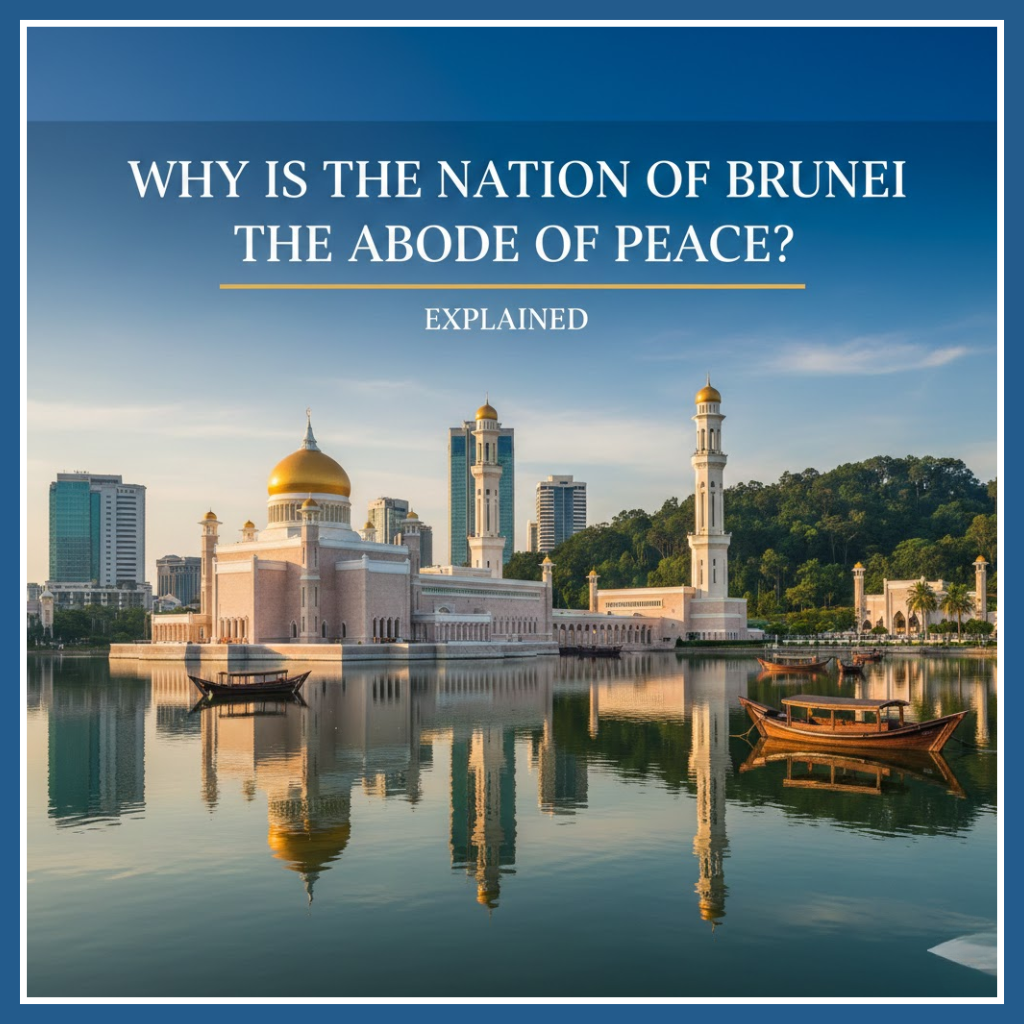
Nestled on the northern coast of Borneo, Brunei Darussalam, often referred to as “the abode of peace,” stands as a remarkable example of a small nation preserving its rich cultural heritage while achieving modern prosperity.
Known for its political stability, economic wealth, and social harmony, Brunei offers a unique blend of tradition and progress. This article explores the nation’s history, governance, culture, economy, and sustainable initiatives, providing a comprehensive understanding of why Brunei is considered a peaceful and prosperous nation.
Introduction to Brunei Darussalam
Brunei Darussalam is a sovereign sultanate in Southeast Asia, bordered by Malaysia and the South China Sea. Its official title, “Negara Brunei Darussalam,” translates to “State of Brunei, the Abode of Peace,” reflecting its national philosophy rooted in harmony and stability.
What Makes Brunei “the Abode of Peace”?
The term emphasizes political stability, religious harmony, and social order. Brunei’s governance under a Malay Islamic Monarchy ensures a balance between tradition and modern administration, contributing to low crime rates, peaceful communities, and a high standard of living.
A Brief Historical Overview
Brunei’s history spans over six centuries. It rose as a powerful sultanate in the 15th century, controlling trade in Borneo and the surrounding islands. Colonization by the British in the 19th and 20th centuries introduced modern administrative structures, while Brunei regained full independence in 1984. Its history shaped a resilient national identity centered on Islamic principles and Malay traditions.
Governance and Political Stability
Brunei is governed under a unique Malay Islamic Monarchy, where the Sultan serves as both head of state and government.
Sultanate Monarchy System
Sultan Hassanal Bolkiah, one of the world’s longest-reigning monarchs, oversees legislation, foreign policy, and administration. The monarchy ensures continuity and stability, with decision-making guided by both modern governance and Islamic law (Sharia).
Legal and Administrative Framework
Brunei maintains a dual legal system combining civil and Sharia courts. Civil courts handle administrative and commercial disputes, while Sharia courts address family law, religious obligations, and certain criminal offenses. This system reinforces social harmony while respecting cultural and religious values.
National Philosophy and Peace Policies
The nation adheres to Melayu Islam Beraja (MIB), or Malay Islamic Monarchy, promoting peaceful coexistence, moral governance, and national unity. Initiatives include community outreach, religious education, and interfaith dialogue, which collectively uphold Brunei’s reputation as a serene and orderly society.
Economy and Development
Brunei is one of the wealthiest nations in the world per capita, primarily due to its oil and gas sector, but it is actively pursuing economic diversification.
Oil and Gas Dominance
Brunei Shell Petroleum remains the cornerstone of the economy, contributing significantly to the national GDP. Oil exports finance public services, infrastructure, and social welfare programs.
Economic Diversification
Beyond hydrocarbons, Brunei is investing in technology, finance, tourism, and halal industries. Free trade zones and government incentives encourage foreign investment while nurturing local entrepreneurship.
Infrastructure and Urban Planning
The capital, Bandar Seri Begawan, is a model of urban development blending modern amenities with traditional architecture. Projects include smart city initiatives, improved transportation networks, and eco-friendly public spaces, demonstrating Brunei’s commitment to sustainable urban growth.
Culture, Religion, and Society
Brunei’s cultural identity is deeply intertwined with Malay traditions and Islamic teachings, fostering a cohesive society.
Malay Islamic Traditions
Traditional ceremonies, attire, and language reflect centuries-old customs. Festivals such as Hari Raya Aidilfitri and the Sultan’s birthday are celebrated nationwide, reinforcing community bonds.
Religious Harmony Initiatives
While Islam is the official religion, Brunei accommodates Christian, Buddhist, and other communities. Interfaith programs and peaceful coexistence policies reduce social tension and enhance national unity.
Arts, Festivals, and Heritage
Brunei’s arts include traditional music, dance, and handicrafts such as weaving and wood carving. Heritage sites like Kampong Ayer, the water village, preserve centuries of history and attract cultural tourism.
Also read: What Makes Megan Thee Stallion Tequila Stand Out From Others
Education, Healthcare, and Social Welfare
Brunei invests heavily in human capital, ensuring education, healthcare, and social welfare are accessible to all citizens.
Schools and Universities
Public education is free, with emphasis on religious studies, science, and technology. Universiti Brunei Darussalam (UBD) leads higher education, offering programs that support national development and global competitiveness.
Healthcare System Overview
Healthcare is subsidized, providing residents with modern facilities, preventive care, and specialist treatment. Government initiatives focus on disease prevention, mental health, and community well-being.
Youth and Social Reforms
Programs promoting entrepreneurship, digital literacy, and civic engagement prepare the youth to contribute to national progress while respecting cultural traditions.
Tourism and Natural Beauty
Despite its small size, Brunei boasts a wealth of natural and cultural attractions.
Top Landmarks and Mosques
- Istana Nurul Iman: The Sultan’s palace, the largest residential palace in the world
- Omar Ali Saifuddien Mosque: Iconic mosque with golden domes
- Jame’Asr Hassanil Bolkiah Mosque: Majestic architecture reflecting Islamic artistry
Eco-Tourism and National Parks
Brunei preserves vast rainforests, rivers, and mangroves. Temburong National Park offers eco-trekking, canopy walks, and wildlife observation, attracting environmentally conscious travelers.
Hidden Villages and Cultural Sites
Lesser-known heritage villages maintain traditional crafts, riverine transport history, and local cuisine, providing visitors with authentic cultural experiences beyond typical tourist routes.
International Relations and Diplomacy
Brunei maintains a careful foreign policy, emphasizing regional cooperation and global peace initiatives.
ASEAN Membership
As a founding ASEAN member, Brunei engages in trade, security, and cultural exchanges with neighboring countries, promoting regional stability.
Foreign Policy and Global Peace Efforts
Brunei participates in UN peacekeeping, humanitarian aid, and diplomatic dialogue, reinforcing its identity as a nation committed to peace and harmonious coexistence.
Sustainability and Future Prospects
Brunei recognizes the need for sustainable development to preserve its natural and cultural heritage.
Environmental Policies
Government programs focus on forest conservation, renewable energy adoption, and pollution control. Initiatives encourage businesses and citizens to participate in eco-friendly practices.
Climate Action Plans
National strategies aim to mitigate climate change impacts, promote low-carbon energy, and protect biodiversity in rainforests and coastal ecosystems.
Vision for a Peaceful Nation
The long-term goal is to maintain economic prosperity, social harmony, and environmental sustainability, ensuring Brunei continues to embody the “abode of peace” for generations to come.
FAQS: Nation of Brunei the Abode of Peace
Why is Brunei called the abode of peace?
Brunei’s term “abode of peace” reflects its political stability, low crime rates, and harmonious social structure guided by Malay Islamic Monarchy principles.
How does Brunei maintain political stability?
Through a centralized monarchy, a dual legal system, and strong community engagement programs that foster trust, unity, and compliance with national values.
What role does Islam play in Brunei society?
Islam shapes laws, education, and cultural practices, promoting moral governance, social harmony, and interfaith respect.
What are the main tourist attractions in Brunei?
Key attractions include Istana Nurul Iman, Omar Ali Saifuddien Mosque, Jame’Asr Hassanil Bolkiah Mosque, Temburong National Park, and Kampong Ayer.
How is Brunei balancing tradition and modernity?
By preserving cultural heritage, supporting traditional arts, and integrating modern infrastructure, education, and technology in urban and rural communities.
Conclusion: Key Takeaways
Brunei Darussalam stands out as a small nation with an outsized commitment to peace, stability, and prosperity. Its unique governance under the Malay Islamic Monarchy, combined with economic wealth, cultural preservation, and sustainable development, creates a society that balances tradition with modernity.
From eco-tourism and heritage sites to robust education and healthcare, Brunei exemplifies how a nation can cultivate both internal harmony and international respect. Understanding Brunei as “the abode of peace” offers valuable insights into how thoughtful governance, cultural identity, and sustainable practices contribute to lasting societal stability.
