

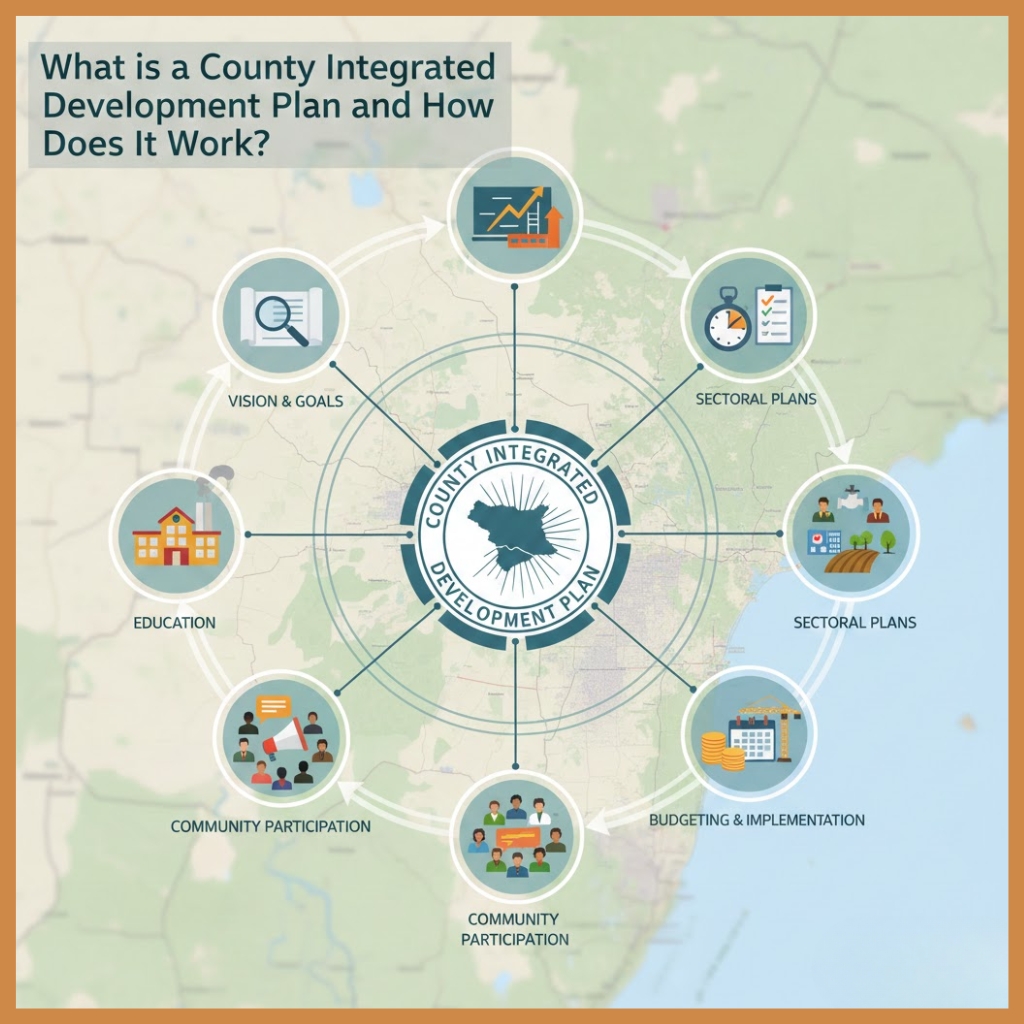
A County Integrated Development Plan (CIDP) is a strategic framework used by county governments to guide development over a medium-term period, typically five years. It serves as a blueprint for allocating resources, setting priorities, and coordinating projects across various sectors. Essentially, a CIDP ensures that county-level planning is coherent, participatory, and aligned with national development goals.
CIDPs are not just bureaucratic documents—they are practical instruments for implementing policies, improving service delivery, and fostering socio-economic growth. By understanding what a county integrated development plan is, stakeholders, citizens, and policymakers can participate meaningfully in shaping their communities’ futures.
Definition and Core Purpose of a CIDP
What is a CIDP?
A County Integrated Development Plan is a legally mandated document that outlines a county government’s strategic development priorities, resource allocations, and performance goals over a five-year period. It integrates social, economic, and environmental planning to ensure balanced and sustainable growth.
Purpose of a CIDP:
- Provide a structured roadmap for development activities.
- Guide budget allocation and fiscal planning.
- Enhance public participation and stakeholder engagement.
- Facilitate monitoring, evaluation, and accountability.
The plan is anchored in the County Government Act, 2012, and aligns with the Public Finance Management Act to ensure that development planning translates into actionable and measurable outcomes.
Legal and Constitutional Framework
CIDPs derive their authority from several legal and policy instruments:
- County Government Act, 2012 – mandates the preparation, approval, and implementation of CIDPs.
- Public Finance Management Act (PFM), 2012 – ensures the plan links to budgeting and fiscal discipline.
- Vision 2030 – aligns county development priorities with Kenya’s national long-term development blueprint.
- Sustainable Development Goals (SDGs) – integrates global targets into county-specific planning.
These frameworks ensure that a CIDP is not a standalone document but part of a structured, legally compliant, and results-oriented planning ecosystem.
Components of a CIDP Document
A comprehensive CIDP consists of several key sections designed to provide clarity, accountability, and guidance:
1. Situational Analysis
This section provides an evidence-based assessment of the county’s socio-economic, environmental, and institutional landscape. It typically includes:
- Demographic and population trends
- Economic activities and key industries
- Infrastructure and service delivery gaps
- Environmental and natural resource considerations
Also read: How Long Is a Hockey Game and What Affects Its Total Duration
2. Strategic Goals and Priority Projects
CIDPs set clear strategic objectives and identify priority projects that contribute to socio-economic growth. Examples include:
- Healthcare facility expansion
- Road network improvement
- Agricultural support programs
- Education and skills development initiatives
3. Resource Allocation and Budget Integration
The plan aligns development priorities with financial resources using the Medium-Term Expenditure Framework (MTEF). This ensures that projects are funded appropriately and that county resources are used efficiently.
4. Implementation, Monitoring, and Evaluation
CIDPs include a framework for tracking progress through measurable performance indicators, periodic reporting, and mid-term reviews. This promotes transparency, accountability, and continuous improvement.
CIDP Development Process
Developing a CIDP involves multiple steps to ensure inclusivity, accuracy, and strategic alignment.
Step 1: Stakeholder Mapping and Public Participation
Public engagement is central to CIDP development. Stakeholders include county officials, local leaders, civil society organizations, and citizens. Participation mechanisms include:
- Public forums and consultations
- Focus group discussions
- Surveys and feedback mechanisms
Step 2: Data Collection and Evidence Base
Accurate data underpins the CIDP. Counties use statistical abstracts, surveys, and sectoral reports to identify development gaps, socio-economic trends, and resource needs.
Step 3: Drafting and Approval Workflow
The drafting process involves sectoral planning teams integrating data and stakeholder input. After drafting, the plan undergoes review by the county executive and county assembly before formal approval.
CIDP vs Sectoral and Annual Development Plans
It is important to distinguish between a CIDP, sectoral plans, and Annual Development Plans (ADPs):
| Plan Type | Purpose | Timeframe | Scope |
|---|---|---|---|
| CIDP | County-wide strategic roadmap | 5 years | Integrated across sectors |
| Sectoral Plan | Focus on specific sector (e.g., health, education) | 5 years | Single-sector priorities |
| ADP | Annual implementation plan | 1 year | Operational projects aligned with CIDP |
This distinction ensures clarity in planning, execution, and monitoring.
Implementation and Monitoring
Monitoring CIDP implementation is crucial for performance measurement and accountability. Key steps include:
- Performance Indicators: Measurable outcomes aligned with strategic objectives.
- Mid-Term Reviews: Assess progress and adjust priorities as needed.
- Reporting Systems: Transparency through regular reporting to the public and the county assembly.
Counties increasingly use digital tools, GIS mapping, and performance dashboards to track project execution and outcomes.
Challenges in CIDP Implementation
Despite its importance, CIDP implementation faces several challenges:
- Limited financial resources or delays in disbursement
- Inadequate public participation and stakeholder engagement
- Poor data quality and insufficient evidence for decision-making
- Political interference or shifting priorities
- Coordination gaps between sectors and government levels
Addressing these challenges requires adaptive planning, capacity building, and continuous monitoring.
Integration with National Development Goals
CIDPs align county-level priorities with national and global development frameworks, ensuring coherence and sustainability.
- Vision 2030: CIDPs translate national development aspirations into actionable county-level strategies.
- Sustainable Development Goals: Local planning integrates targets such as healthcare, education, and environmental sustainability.
- Spatial Planning: GIS and land-use frameworks guide infrastructure placement and service delivery.
This alignment ensures counties contribute effectively to broader socio-economic development objectives.
Real-World Use Cases
Several Kenyan counties provide practical examples of CIDP application:
- Nakuru County: Integrated road, health, and education projects with measurable performance outcomes.
- Makueni County: Leveraged GIS data for agricultural development and infrastructure planning.
- Marsabit County: Focused on water resource management and public participation frameworks.
These examples demonstrate how a well-executed CIDP can drive measurable social and economic improvements.
Advanced Insights: Untapped CIDP Considerations
While most CIDPs cover standard components, advanced countries integrate:
- Data-Driven Socio-Economic Profiling: Using real-time data to prioritize interventions.
- Cross-Sectoral Integration: Coordinating initiatives across agriculture, health, and infrastructure for maximum impact.
- Participatory Governance Models: Strengthening legitimacy through citizen involvement.
- Digital Tools and Automation: Leveraging technology for budgeting, reporting, and monitoring.
These elements enhance the CIDP’s effectiveness, sustainability, and relevance in dynamic development contexts.
FAQS: What is County Integrated Development Plan
Who prepares the county’s integrated development plan?
CIDPs are prepared by county planning departments, with input from sectoral teams, stakeholders, and the public.
How often is a CIDP updated?
CIDPs are typically updated every five years, with mid-term reviews to assess progress and adjust priorities.
How does a CIDP guide county budgeting?
The CIDP aligns strategic priorities with financial resources through the Medium-Term Expenditure Framework, ensuring funding matches planned projects.
What are common challenges in CIDP implementation?
Challenges include limited resources, inadequate data, insufficient public participation, and political interference.
What is the difference between a CIDP and an Annual Development Plan?
A CIDP is a five-year strategic plan covering all sectors, while an ADP focuses on operationalizing specific projects within one year.
Conclusion: Key Takeaways
A County Integrated Development Plan is more than a planning document—it is a strategic, legally grounded, and participatory framework that guides county development over a medium-term horizon.
Understanding what a county integrated development plan is empowers citizens, policymakers, and stakeholders to participate meaningfully in shaping local development outcomes.
Actionable Insights:
- Engage in public consultations to influence priority projects.
- Use CIDP data to track county development progress.
- Leverage mid-term reviews to adjust strategies for emerging needs.
- Integrate digital tools for monitoring and reporting.
