

New England is a region rich in history, culture, and natural beauty, but many people wonder exactly where in the US New England is located and what makes it distinct from other parts of the country.
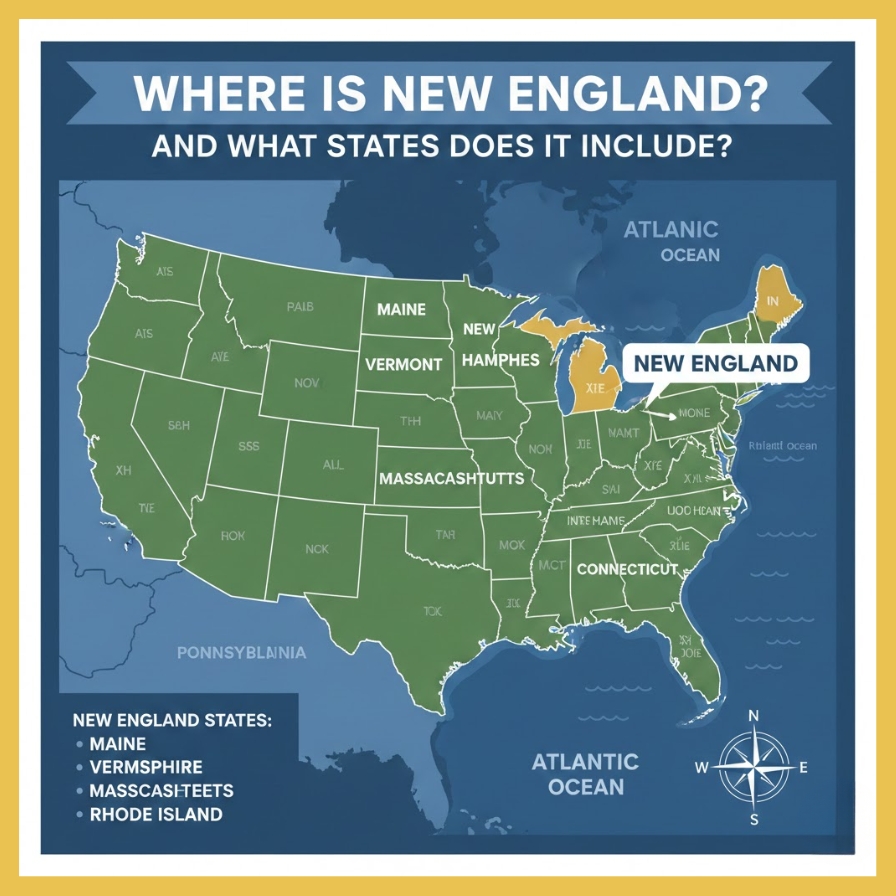
Situated in the northeastern corner of the United States, New England encompasses six states—Maine, New Hampshire, Vermont, Massachusetts, Rhode Island, and Connecticut. This guide provides a complete overview of New England’s geography, culture, cities, history, and attractions, offering both beginners and advanced readers a comprehensive understanding of the region.
Introduction to New England
New England has long been recognized for its unique cultural identity, scenic landscapes, and historical significance. From colonial settlements to modern metropolitan hubs, the region combines tradition with innovation. Understanding New England’s location, characteristics, and contributions to the United States helps travelers, students, and enthusiasts appreciate its significance.
Definition and Location
New England refers to the northeasternmost region of the United States. Bordered by the Atlantic Ocean to the east and Canada to the north, it lies above the Mid-Atlantic states and includes:
- Maine
- New Hampshire
- Vermont
- Massachusetts
- Rhode Island
- Connecticut
Geographically, it is part of the larger Northeastern United States but stands out for its colonial history, distinctive climate, and regional culture.
States That Make Up New England
Massachusetts
Massachusetts, often considered the cultural and economic heart of New England, features Boston—the region’s largest city and a hub for education, sports, and history. The state is known for landmarks like Fenway Park, the Freedom Trail, and historic towns such as Plymouth and Salem.
Connecticut
Connecticut blends coastal towns, industrial cities, and suburban areas. Hartford and New Haven are key urban centers, while the Connecticut River adds scenic charm. The state is home to Yale University, contributing to New England’s strong academic presence.
Rhode Island
The smallest state in the US, Rhode Island, offers a compact mix of coastal attractions and historic architecture. Providence, the capital, combines arts, education, and culinary culture in a vibrant urban setting.
Vermont
Known for its mountains, lakes, and rural landscapes, Vermont embodies New England’s natural beauty. Burlington, Montpelier, and small towns provide cultural activities while preserving the state’s iconic countryside.
New Hampshire
New Hampshire is famous for the White Mountains, hiking trails, and lakes. Concord is the state capital, but many towns are renowned for their autumn foliage and outdoor recreation opportunities.
Maine
Maine is the northeasternmost state, featuring rugged coastlines, lighthouses, and forests. Portland and Bar Harbor are popular destinations for travelers seeking a mix of natural beauty and historic charm.
Geography and Natural Features
New England’s geography is remarkably diverse. From rocky coastlines to forested mountains, the region offers a range of landscapes:
- Mountains and Hills: The White Mountains in New Hampshire and the Green Mountains in Vermont provide hiking, skiing, and scenic vistas.
- Rivers and Lakes: The Connecticut River and numerous lakes across Vermont and New Hampshire offer recreational activities and historical significance.
- Coastal Regions: Maine and Massachusetts feature iconic coastlines, including Cape Cod and numerous lighthouses that draw visitors year-round.
The region’s climate varies, with cold winters, warm summers, and vibrant fall foliage that makes it a prime destination for seasonal tourism.
Culture, Traditions, and Identity
New England is not just geography; it’s a cultural experience shaped by centuries of history.
Local Cuisine and Specialties
Seafood, particularly lobster and clam dishes, dominates coastal areas. Other iconic foods include Boston cream pie, Vermont cheddar cheese, and Rhode Island’s clam chowder.
Festivals and Events
Each state celebrates unique traditions. Fall harvest festivals, summer music events, and historic reenactments showcase New England’s diverse heritage.
Regional Dialects and History
New England accents vary subtly across states. The region’s colonial past is preserved in architecture, historical landmarks, and cultural institutions. Cities like Boston and Salem are living reminders of New England’s role in early American history.
Major Cities and Urban Areas
While New England is known for its small towns and natural landscapes, its cities contribute significantly to the economy and culture.
- Boston, Massachusetts: A historic, academic, and cultural hub.
- Hartford, Connecticut: Financial and insurance center with historic sites.
- Providence, Rhode Island: Arts and culinary hotspot with colonial roots.
- Portland, Maine: Coastal city known for food, culture, and scenic beauty.
These urban centers coexist with quaint towns and rural landscapes, providing a balance between modernity and tradition.
Tourism and Travel in New England
New England is a prime destination for domestic and international tourists, offering both popular attractions and hidden gems.
Top Attractions
- Freedom Trail, Boston: Walk through the city’s colonial history.
- Cape Cod, Massachusetts: Beaches, lighthouses, and coastal charm.
- White Mountains, New Hampshire: Hiking, skiing, and scenic drives.
- Bar Harbor, Maine: Gateway to Acadia National Park.
Also read: How Can You Play and Enjoy The Pizza Edition Games Online
Hidden Gems
- Small towns like Woodstock, Vermont, or Newport, Rhode Island, showcase regional architecture and culture.
- Scenic byways and historic trails provide off-the-beaten-path experiences for travelers seeking less crowded destinations.
Seasonal Activities
- Fall: Foliage tours in Vermont, New Hampshire, and Maine.
- Winter: Skiing in the White Mountains and Green Mountains.
- Spring & Summer: Coastal drives, lobster festivals, and boating on lakes and rivers.
Economy, Education, and Sports
New England has a diverse economy combining education, healthcare, technology, and tourism.
- Major Industries: Finance, technology, healthcare, and manufacturing.
- Universities and Colleges: Harvard University, MIT, Yale University, and other academic institutions foster innovation and cultural enrichment.
- Sports Teams and Stadiums: New England Patriots (NFL), Boston Red Sox (MLB), Boston Celtics (NBA), and Boston Bruins (NHL) illustrate the region’s sports culture.
Maps and Visualization
Understanding New England’s location is easier with maps and visual tools:
- State Maps: Show borders, major cities, and natural features.
- Regional Boundaries: Highlight New England’s position relative to the rest of the US.
- Travel Guides: Interactive maps help tourists plan routes and discover attractions.
| State | Capital | Key Feature | Popular Attraction |
|---|---|---|---|
| Maine | Augusta | Coastline | Acadia National Park |
| New Hampshire | Concord | Mountains | White Mountains |
| Vermont | Montpelier | Forests | Green Mountains |
| Massachusetts | Boston | History & Culture | Freedom Trail |
| Rhode Island | Providence | Smallest State | Newport Mansions |
| Connecticut | Hartford | Rivers & Cities | Yale University |
FAQS: Where in the US is New England
Where is New England located in the US?
New England is in the northeastern corner of the United States, comprising six states: Maine, New Hampshire, Vermont, Massachusetts, Rhode Island, and Connecticut.
Which states are part of New England?
The six states forming New England are Maine, New Hampshire, Vermont, Massachusetts, Rhode Island, and Connecticut.
What is New England known for?
New England is known for its colonial history, universities, natural landscapes, seafood cuisine, and vibrant cultural identity.
How many states make up New England?
Six states form New England.
Conclusion – Why New England is Unique
New England is a region where history, culture, and nature intersect. From colonial settlements and prestigious universities to mountains, rivers, and coastal towns, it offers a unique mix of experiences for residents and visitors alike. Understanding where in the US New England is located in the US and exploring its geography, cities, culture, and attractions allows people to fully appreciate its significance. Whether visiting for education, tourism, or lifestyle, New England remains a distinctive and vibrant part of the United States.
Key Takeaways:
- New England consists of six northeastern states: Maine, New Hampshire, Vermont, Massachusetts, Rhode Island, and Connecticut.
- The region combines historical landmarks, modern cities, and natural beauty.
- Seasonal changes provide unique experiences year-round, from fall foliage to coastal summers.
- Major cities and universities make it an economic and educational hub.
- Hidden towns, scenic byways, and cultural events offer off-the-beaten-path experiences.
