

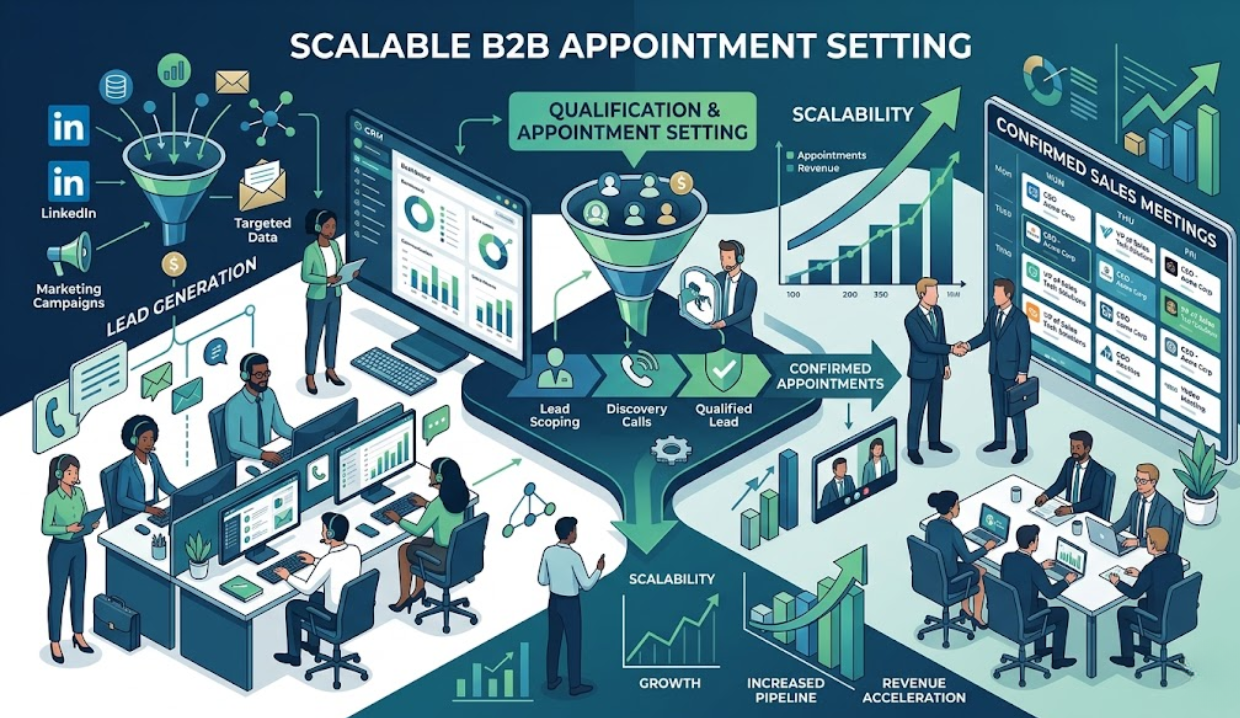
Growing a B2B pipeline sounds simple—reach out, book meetings, close deals. In reality, most teams hit a wall. Outreach stops converting, SDRs burn out, and pipelines become unpredictable.
That’s where scalable B2B appointment setting comes in.
Scalable B2B appointment setting is a structured system that consistently converts targeted prospects into qualified meetings using automation, data, and optimized outreach workflows—without sacrificing quality or deliverability.
Done right, it transforms random outreach into a predictable revenue pipeline.
What Makes Appointment Setting Truly Scalable
Linear vs Scalable Systems
Most teams operate in a linear model:
- More outreach = more effort
- More SDRs = more meetings
But scalability changes the equation:
- Systems replace manual effort
- Automation amplifies output
- Data improves conversion
A scalable outreach sequencing strategy focuses on efficiency, not volume alone.
Key Characteristics of Scalable Appointment Engines
A system is truly scalable when it includes:
- Multi-channel appointment setting workflows
- AI-assisted prospect qualification
- High-efficiency SDR workflows
- Automated follow-up cadence systems
- Predictable outbound sales scalability metrics
These elements create a repeatable appointment setting system that grows without breaking.
Core Architecture of a Scalable Appointment Setting System
A high-performing system has three core layers:
1. Outreach Infrastructure
This includes:
- Multi-domain email setup
- Deliverability optimization (SPF, DKIM, DMARC)
- Tools like CRM systems, scheduling platforms, and automation tools
Without proper infrastructure, scaling outreach leads to spam issues and lost opportunities.
Also read: How B2B Freight Forwarding Services Target Market Analysis Works.
2. Data Layer
Scalability depends on data precision:
- Data enrichment and prospect segmentation systems
- Buyer intent signals and intent-driven appointment scheduling
- Micro-segmentation in outbound prospecting
The goal is simple: reach the right person at the right time.
3. Conversion Layer
This is where meetings are won or lost:
- Cold outreach copy engineered for responses
- Clear CTAs for booking
- Conversion rate optimization for booking pages
A strong lead-to-meeting conversion architecture ensures every touchpoint drives action.
Multi-Channel Outreach Strategy for Scale
Relying on one channel limits growth. A scalable system integrates:
Email + LinkedIn + Calls Synchronization
- Email builds initial awareness
- LinkedIn adds credibility and context
- Calls create urgency
Together, they form a multi-touchpoint engagement system.
Sequence Design for High Reply Rates
A high-performing sequence includes:
- Personalized opening
- Value-driven message
- Follow up with context
- Clear meeting ask
This structure improves meeting booking rate optimization without overwhelming prospects.
Personalization at Scale
Personalization doesn’t mean writing every message manually. Use:
- Dynamic variables
- Behavioral-triggered appointment booking systems
- Cold outreach signal-based personalization
This allows outreach personalization at scale while maintaining relevance.
Automation vs Human SDRs
When to Use AI Automation
AI works best for:
- Reply classification automation systems
- Follow-ups and reminders
- Data enrichment
It increases speed and consistency.
Hybrid Models That Maximize Output
The most effective approach is hybrid:
- AI handles repetitive tasks
- SDRs handle conversations
This creates a balance between automation and human connection.
Scaling SDR Teams Without Bottlenecks
Key strategies:
- SDR capacity optimization model
- Clear workflows and playbooks
- Defined SDR-to-AE ratios
This avoids common issues like SDR burnout and inconsistent performance.
Metrics That Define Scalable Appointment Setting
You can’t scale what you don’t measure.
Core Metrics
- Booking rate
- Show rate
- Conversion rate
- Cost per appointment
These define system efficiency.
Advanced Metrics
- Pipeline velocity
- Appointment setting throughput modeling
- Meeting quality scoring frameworks
- Deal velocity impact
Example Comparison
| Metric | Low-Scale System | Scalable System |
|---|---|---|
| Booking Rate | 1–2% | 4–8% |
| Show Rate | 50% | 70%+ |
| Pipeline Predictability | Low | High |
Tracking these helps build a revenue pipeline predictability system.
Deliverability & Infrastructure Scaling
Scaling outreach without deliverability is a mistake.
Domain Warming & Inbox Placement
Before scaling:
- Warm domains gradually
- Send low volumes first
- Monitor engagement signals
Avoiding Spam Filters
Focus on:
- Clean data
- Personalized messages
- Balanced sending patterns
Outreach Volume Thresholds
Every system has a limit. Understanding outreach saturation threshold analysis helps avoid performance drops.
Qualification & Meeting Quality Optimization
Not all meetings are equal.
Pre-Qualification Systems
Use:
- Lead scoring algorithms
- Meeting intent scoring vs lead scoring
- Prospect readiness scoring before outreach
This ensures only high-quality prospects are booked.
Intent-Based Appointment Booking
Target prospects based on:
- Behavior signals
- Engagement patterns
- Buying intent
This improves conversion and reduces wasted time.
Reducing No-Shows
Common solutions:
- Automated reminders
- Calendar optimization for higher booking rates
- Clear meeting expectations
These reduce pipeline leakage between booking and show-up.
Hidden Bottlenecks in Scaling Appointment Setting
Many systems fail due to overlooked issues.
Outreach Fatigue Signals
Prospects stop responding when:
- Messaging feels repetitive
- Frequency is too high
Use outbound campaign fatigue detection signals to adjust strategy.
Pipeline Leakage Points
Leaks occur between:
- Lead → meeting
- Meeting → attendance
- Attendance → deal
Fixing these improves overall B2B lead conversion velocity.
SDR Capacity Limits
Even the best teams have limits. Scaling requires:
- Automation support
- Workflow optimization
- Load balancing
Advanced Strategies Competitors Miss
Behavioral Trigger-Based Outreach
Trigger outreach based on:
- Website visits
- Content engagement
- Job changes
This increases timing accuracy.
AI Reply Classification & Routing
AI can:
- Identify intent
- Route leads to the right SDR
- Prioritize high-value conversations
This speeds up response time and improves outcomes.
Micro-Segmentation for Higher Conversion
Instead of broad targeting:
- Segment by role, industry, behavior
- Customize messaging per segment
This dramatically improves conversion-focused outreach systems.
Tools & Tech Stack for Scalable Appointment Setting
A strong outbound sales tech stack scaling approach includes:
Core Tools
- CRM systems for pipeline management
- Sales engagement platforms for outreach
- Scheduling tools for bookings
Supporting Tools
- Lead data providers
- AI outreach tools
- Workflow automation systems
Integration Matters
All tools must connect to:
- Track performance
- Automate workflows
- Improve decision-making
This creates a unified sales funnel orchestration system.
Building a Predictable Appointment Pipeline
A predictable pipeline is the end goal.
Forecasting Meeting Volume
Use historical data to estimate:
- Meetings per campaign
- Conversion rates
- Pipeline value
Scaling Without Losing Quality
Focus on:
- Consistent messaging
- Data accuracy
- Continuous testing
Continuous Optimization Loops
A scalable system evolves:
- Launch campaigns
- Measure results
- Identify gaps
- Optimize
This cycle improves performance over time.
FAQS: scalable b2b appointment setting
What is the difference between lead generation and appointment setting?
Lead generation captures interest. Appointment setting converts that interest into scheduled meetings with qualified prospects.
How many appointments can one SDR handle per day?
It depends on complexity, but typically, 3–8 quality meetings per day are sustainable in a structured system.
Why do appointment-setting campaigns fail at scale?
Common reasons:
Poor data quality
Weak messaging
Lack of deliverability optimization
No clear system or process
How to increase meeting booking rate in outbound sales?
Focus on:
Personalization
Clear value proposition
Strong call-to-action
Multi-channel engagement
How to reduce no-shows in booked meetings?
Send reminders
Share agenda
Confirm attendance
Optimize scheduling timing
Key Takeaways
Scalable B2B appointment setting isn’t about sending more messages. It’s about building a system that works consistently.
To achieve this:
- Build strong infrastructure and data systems
- Use multi-channel outreach with personalization
- Combine AI automation with human expertise
- Track the right metrics and optimize continuously
- Fix bottlenecks before scaling further
When these elements align, appointment setting becomes predictable, efficient, and capable of driving long-term growth.
